

Ages 18 months–11 yearsParent participation
Where little hearts make big beats.
A joyful path to real musicianship, built for the whole family.
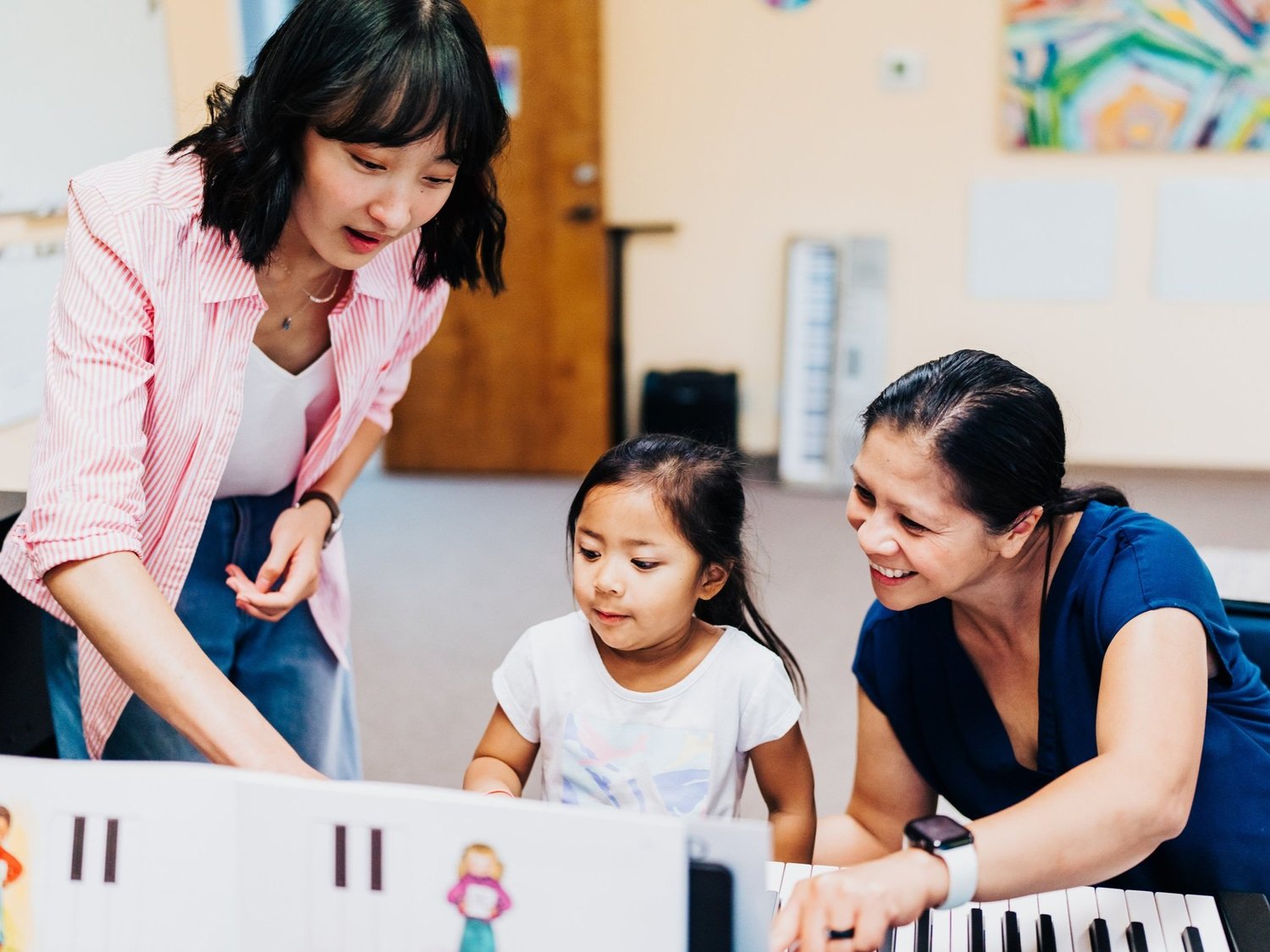
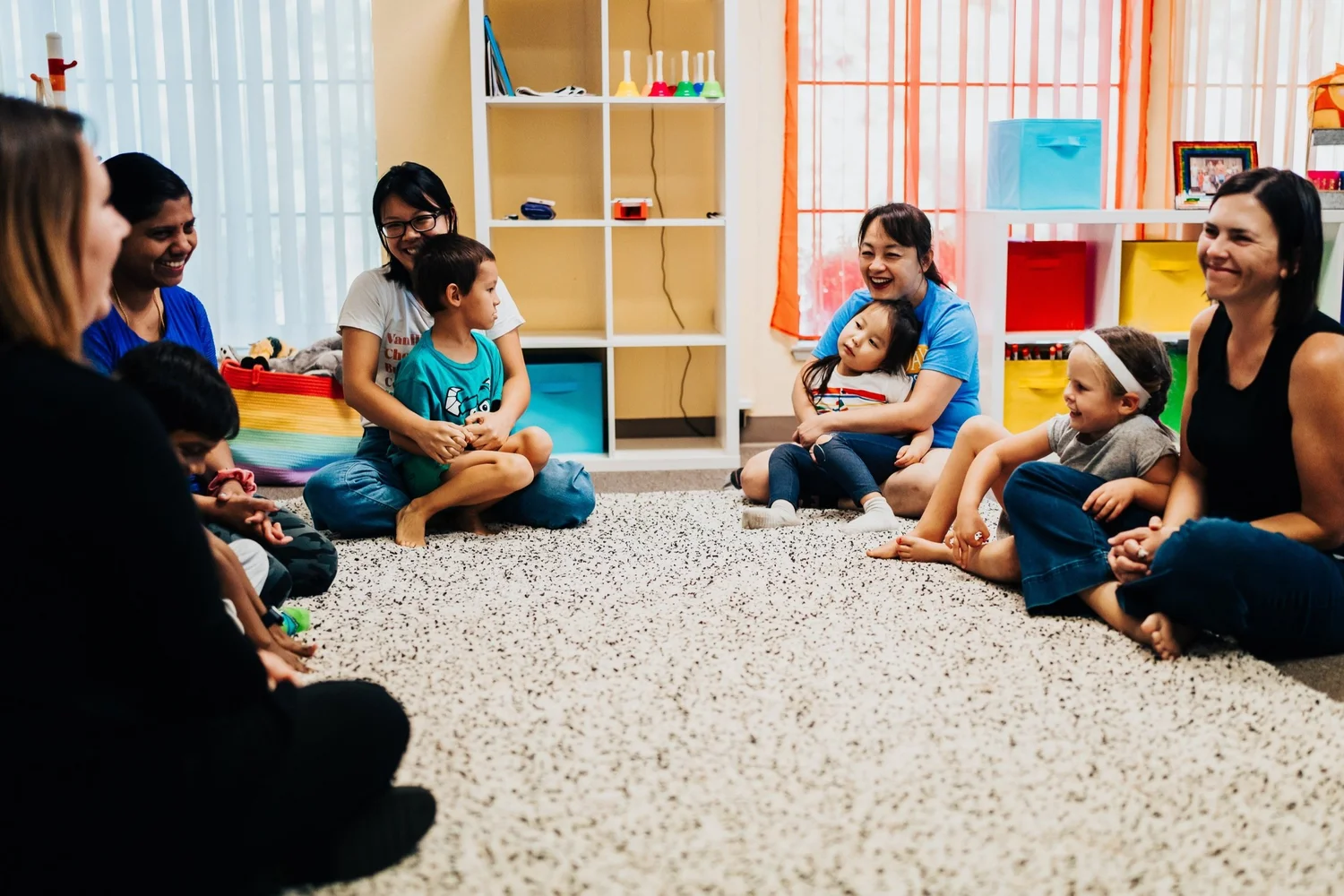
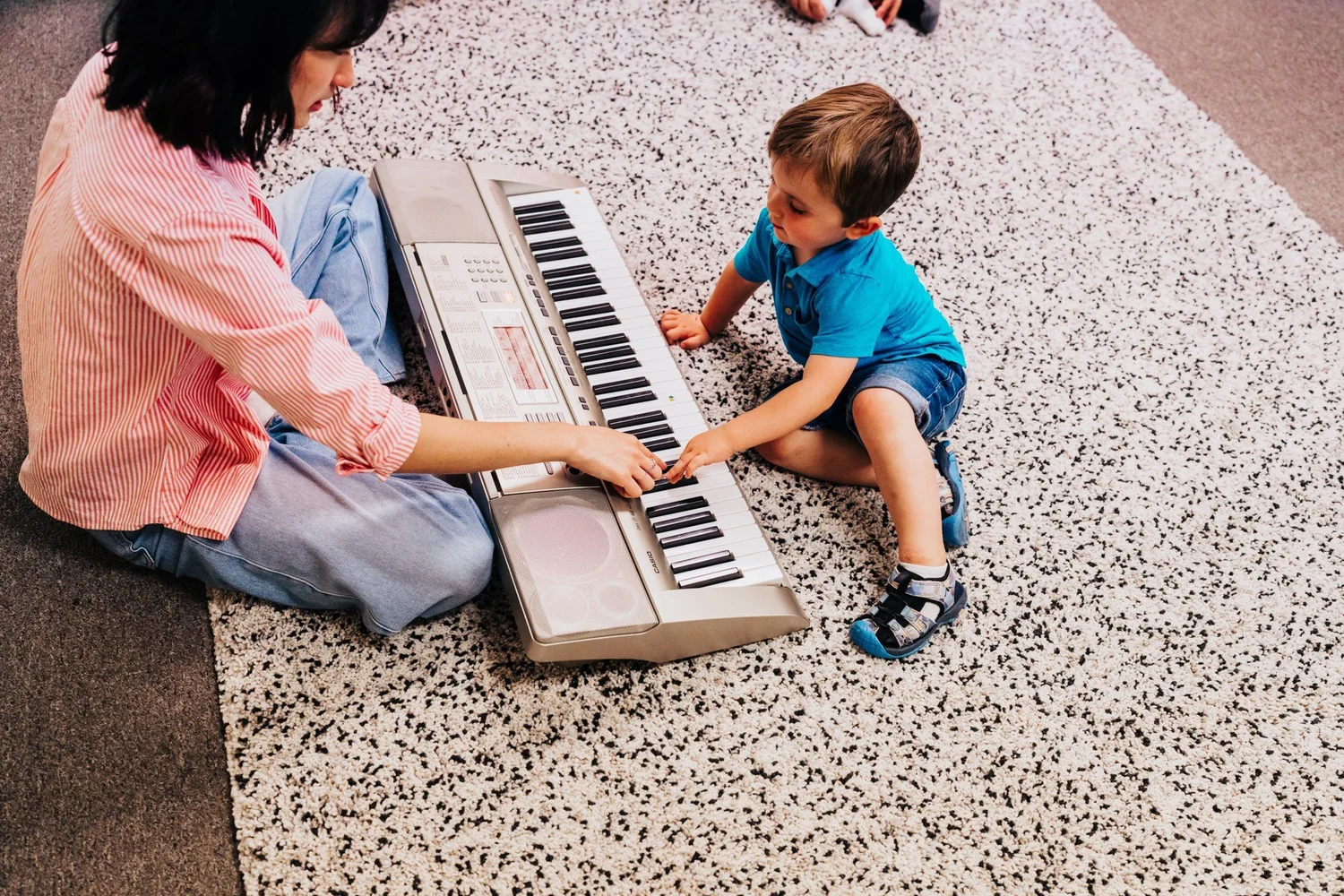
Harmony Road grows with your child from their earliest music-making through confident, independent musicianship. Children sing, move, listen and play alongside their grown-ups, building a strong musical foundation together. Parents participate in every class, learning alongside their child and helping music become part of family life at home.
A parent or caregiver actively participates in every class.
You shouldn’t have to choose between joyful music-making and serious music education.
We believe children deserve both.
Children build strong ears, confident voices, rhythmic fluency, keyboard skills and music literacy through a curriculum designed for their developmental stage.
Music should be something they look forward to, share with people they love, and bring into the car, kitchen and living room.
A child who understands music, loves music and has the foundation to keep making it for a lifetime.
Start where they are.
New to Harmony Road? That’s okay. Every level is designed as an age-appropriate place to begin. We’ll help you choose the class that fits the child in front of us.
Age-appropriate entry points · through approximately age 11
No younger program is a prerequisite.
Toddler Tunes
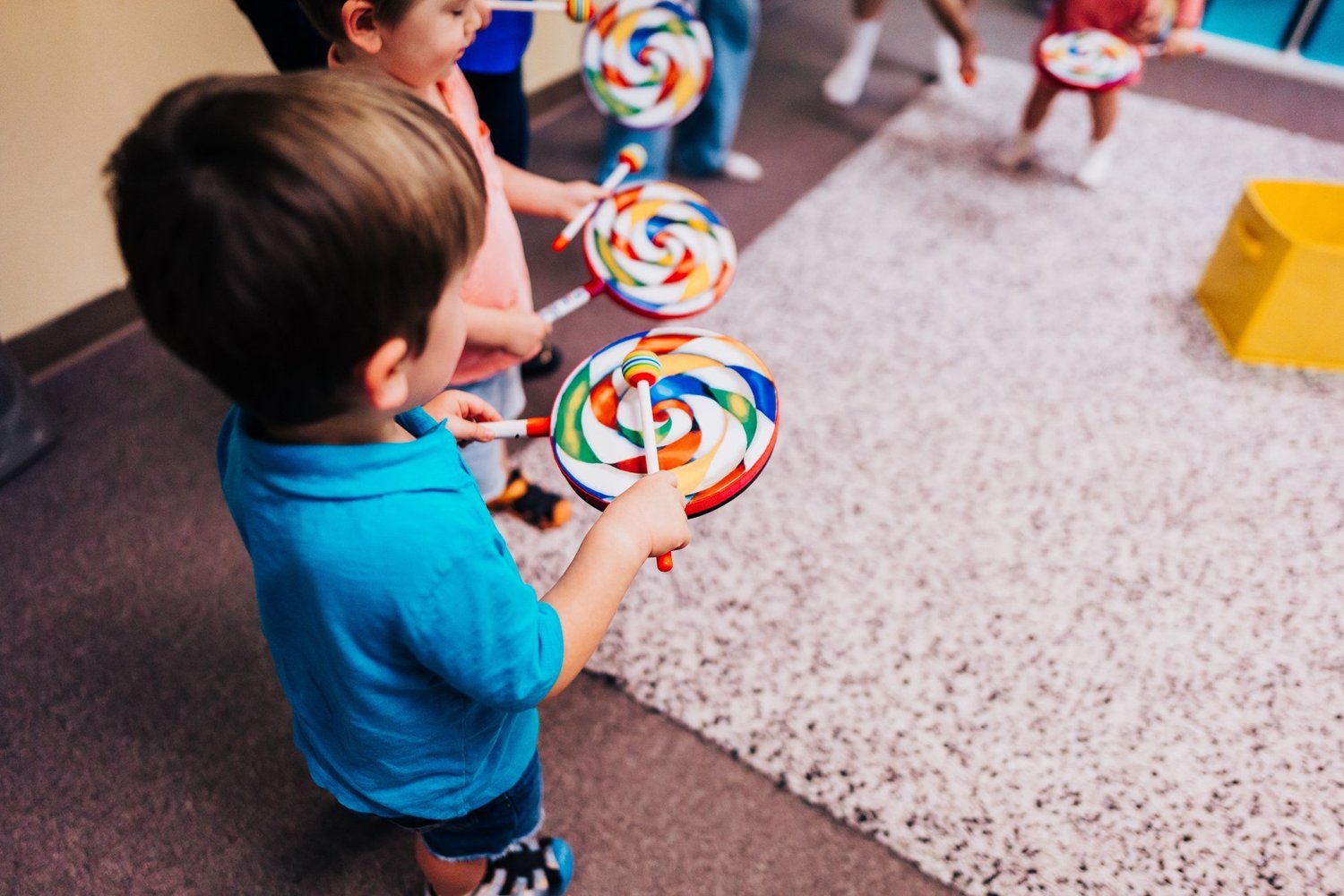
Ages 18 months–3 yearsParent participationSing, move and discover together.
See classes →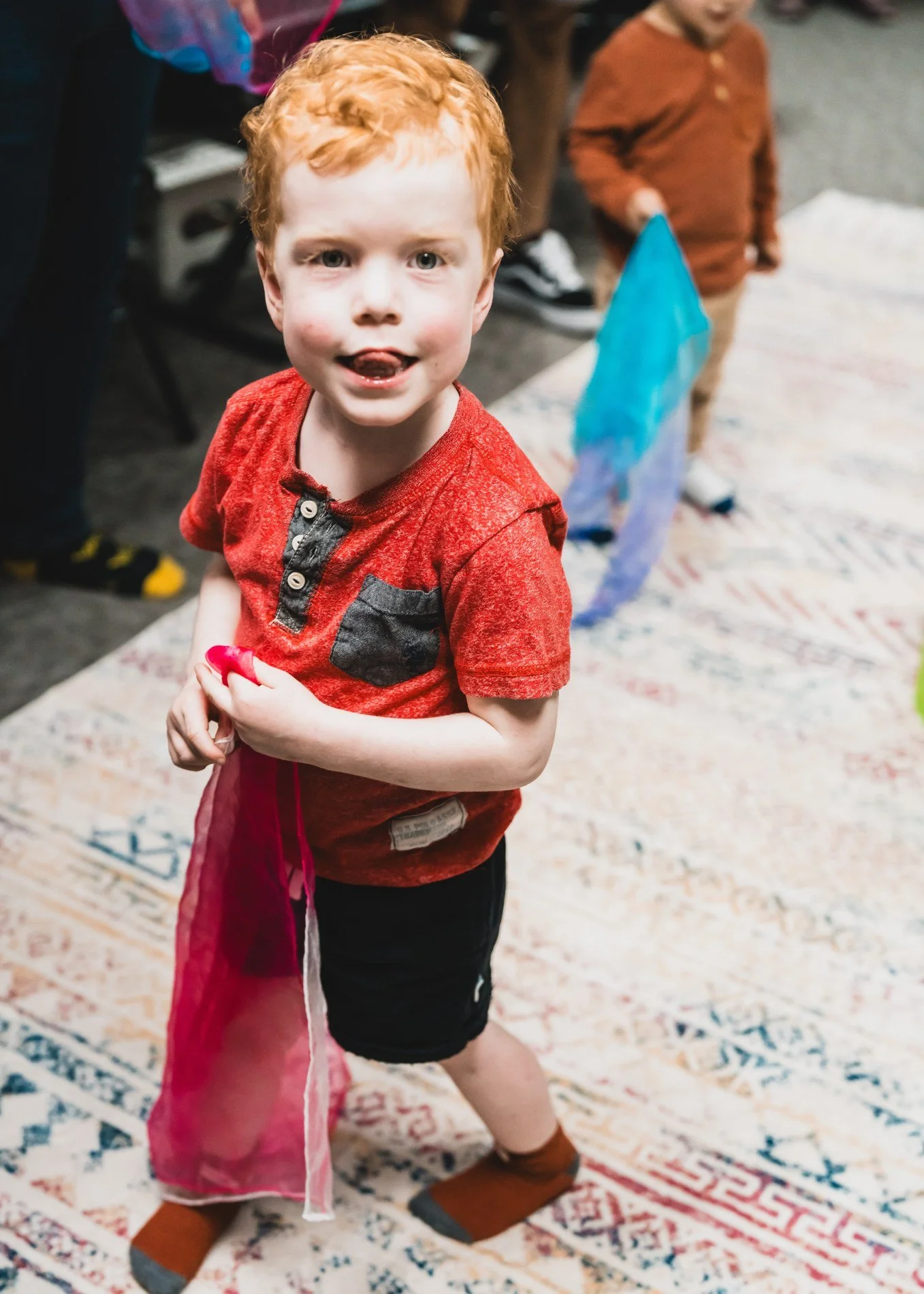
Music in Me
Ages 3½–4½ yearsParent participationCuriosity finds its musical voice.
See classes →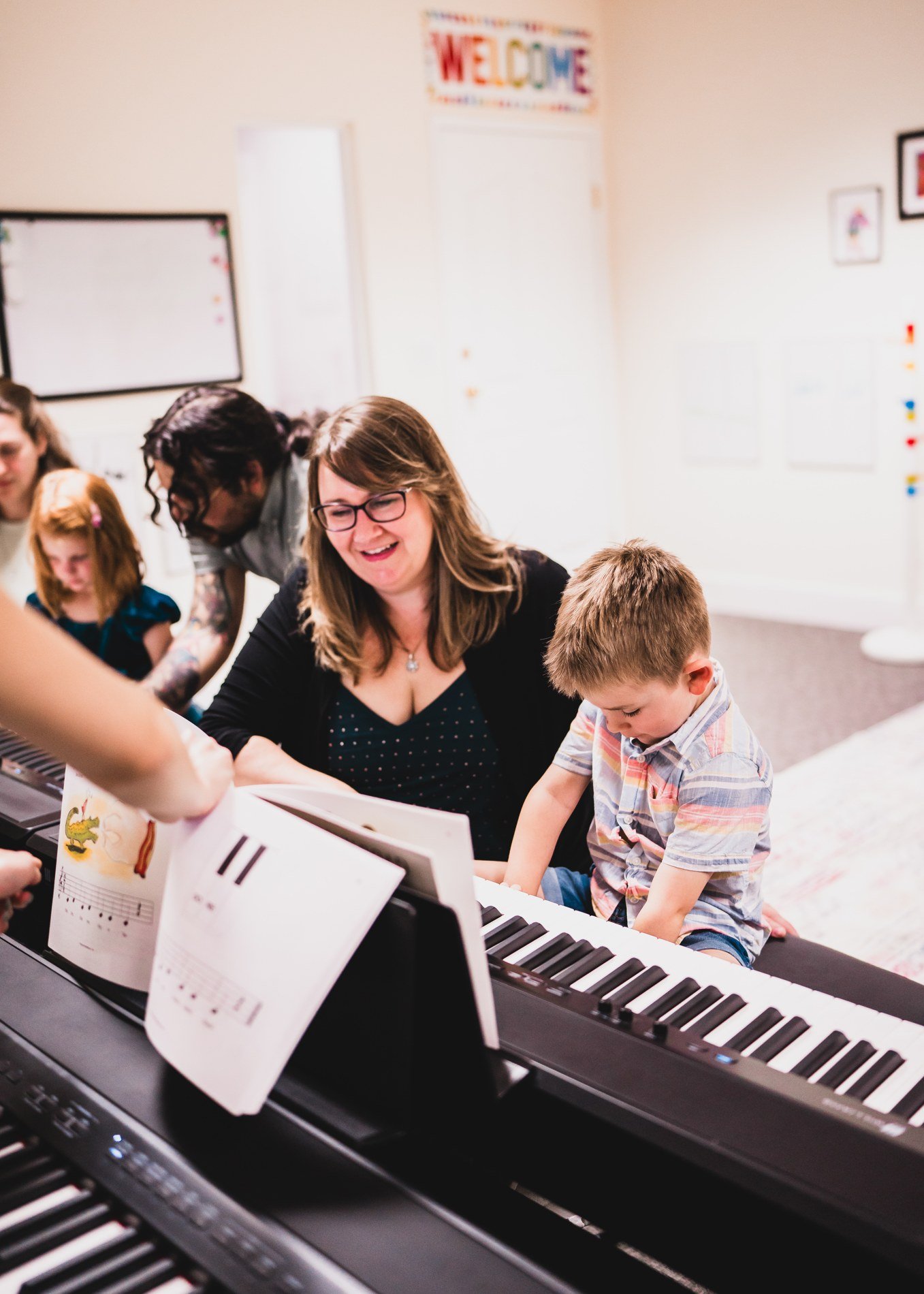
Harmony Road
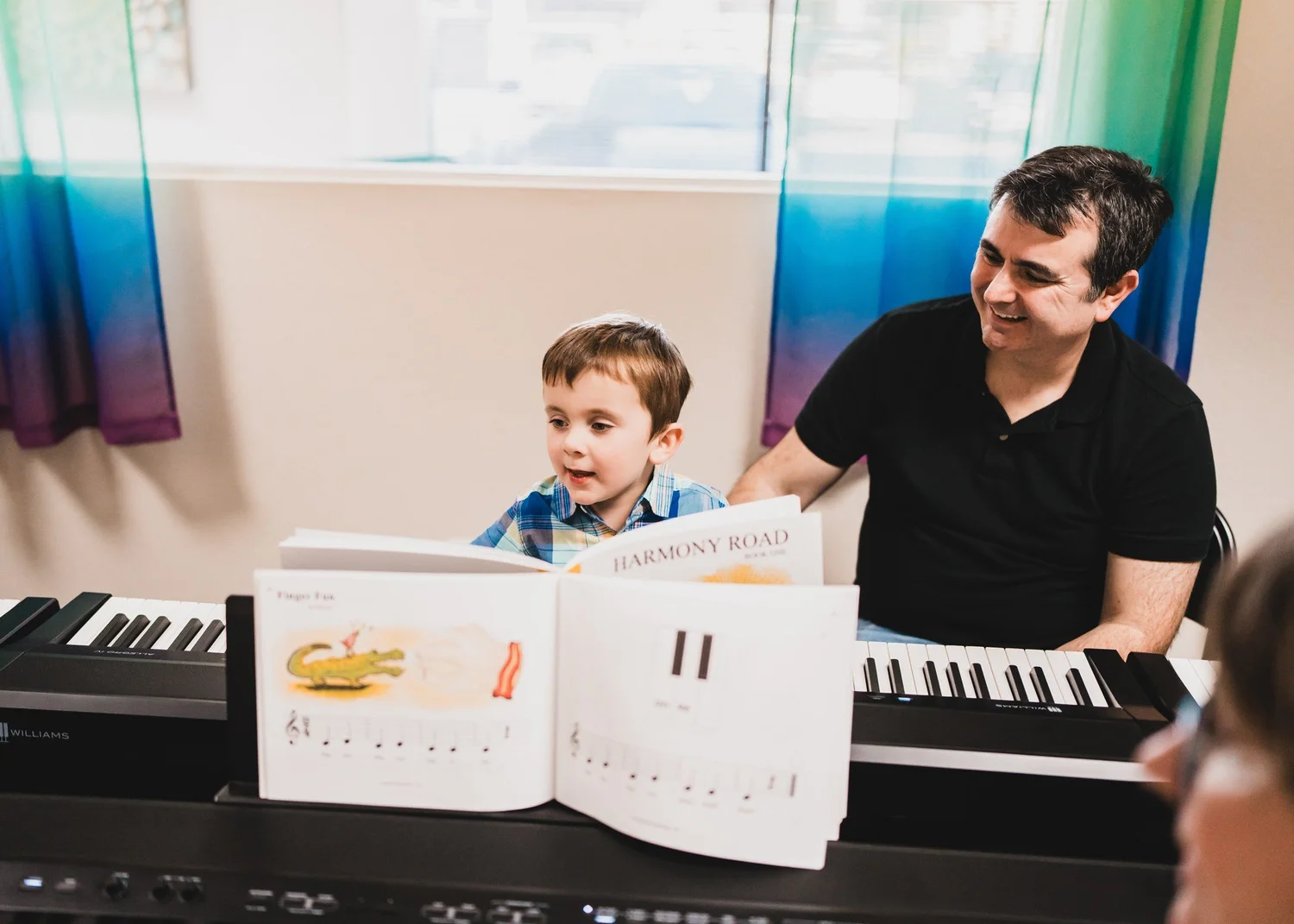
Ages 4½–6½ yearsParent participationStrong ears meet keyboard discovery.
See classes →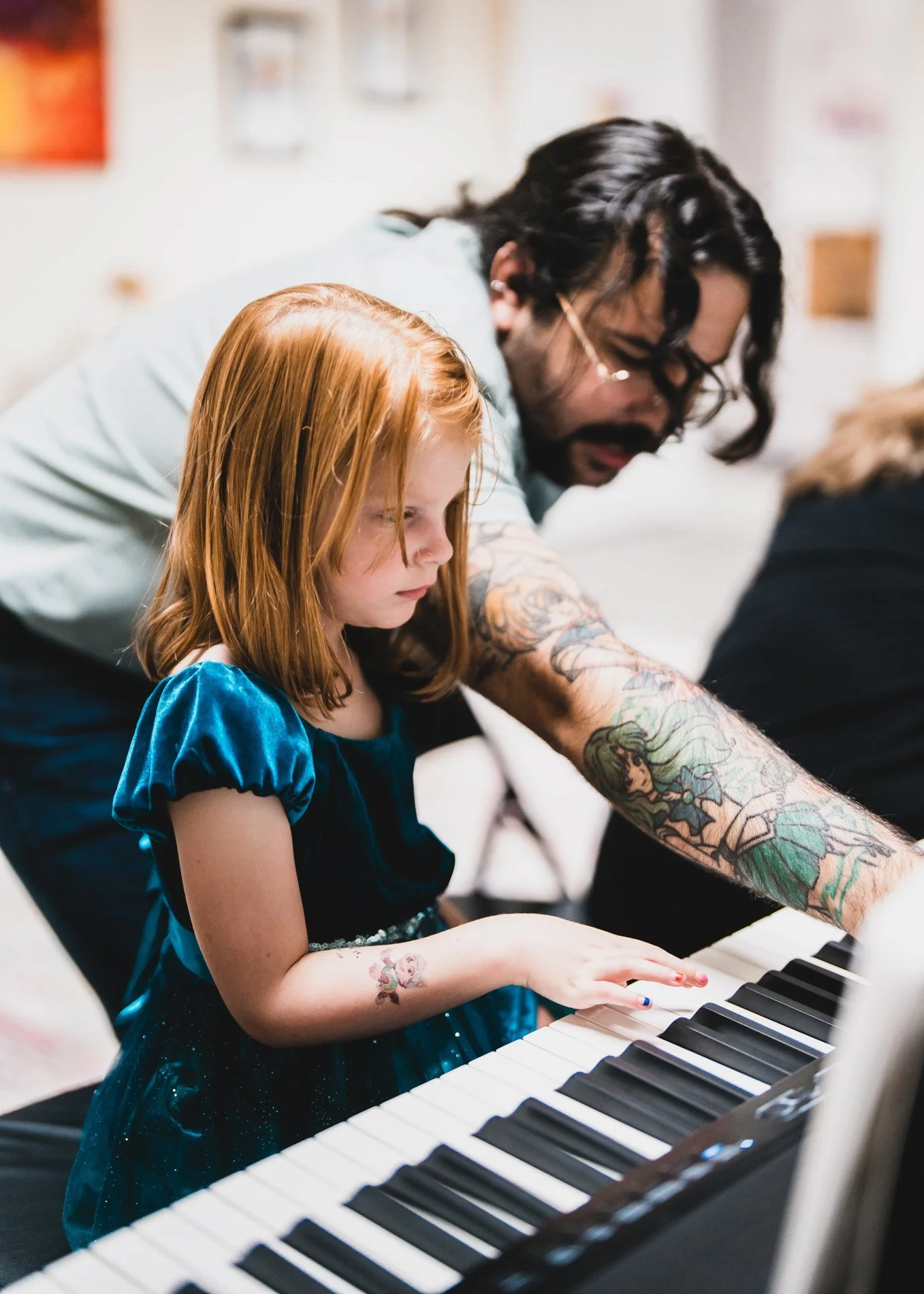
Young Musician
Ages 6½–8 yearsParent participationBuild skills. Make music with others.
See classes →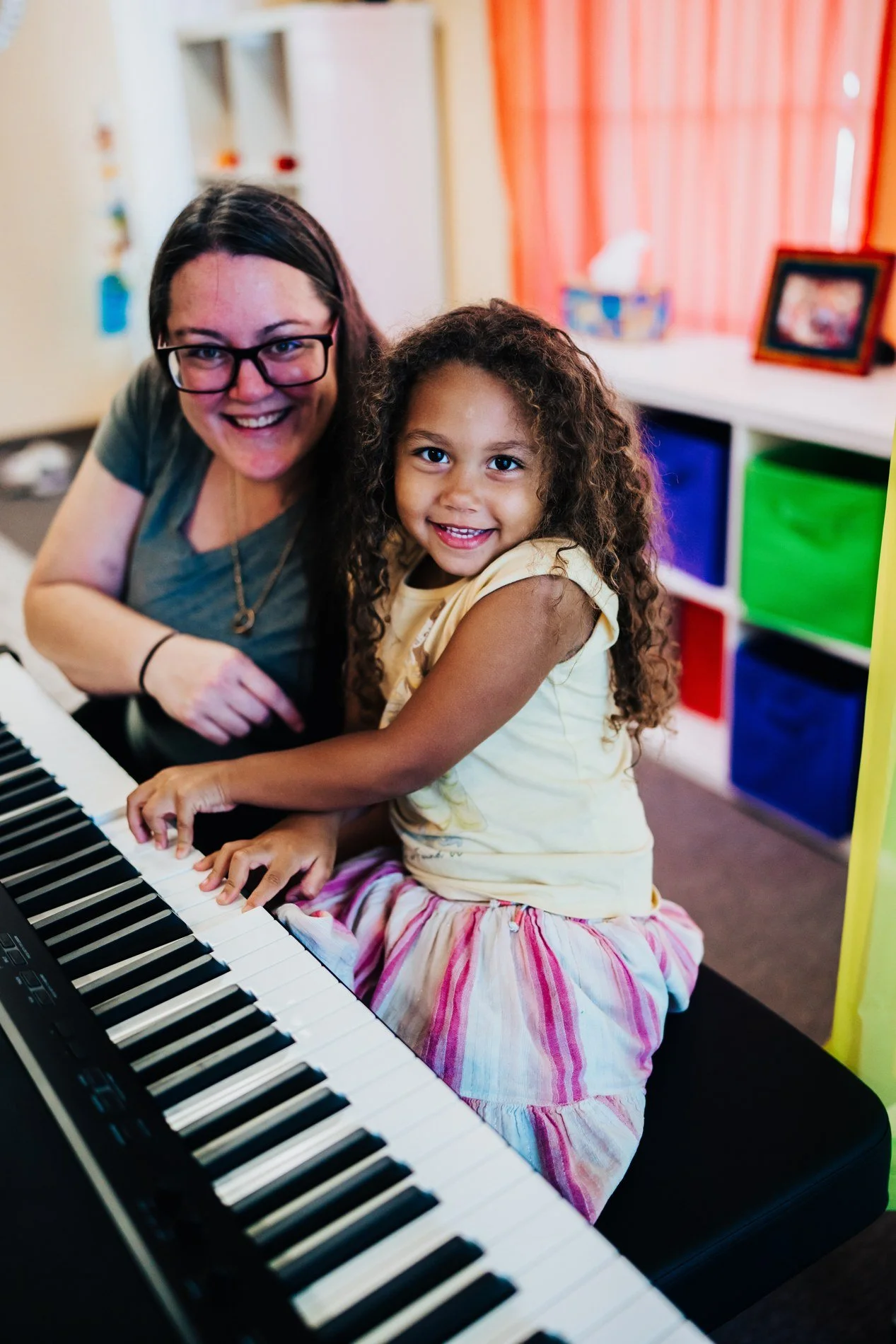
Keyboard Prep
Ages 8–11 yearsParent participationA confident start at the keyboard.
See classes →“It has been lovely to have an activity we do together instead of just me being a chauffeur. The curriculum is very engaging -nothing like the stern piano of my youth. My own singing has improved as a result!”
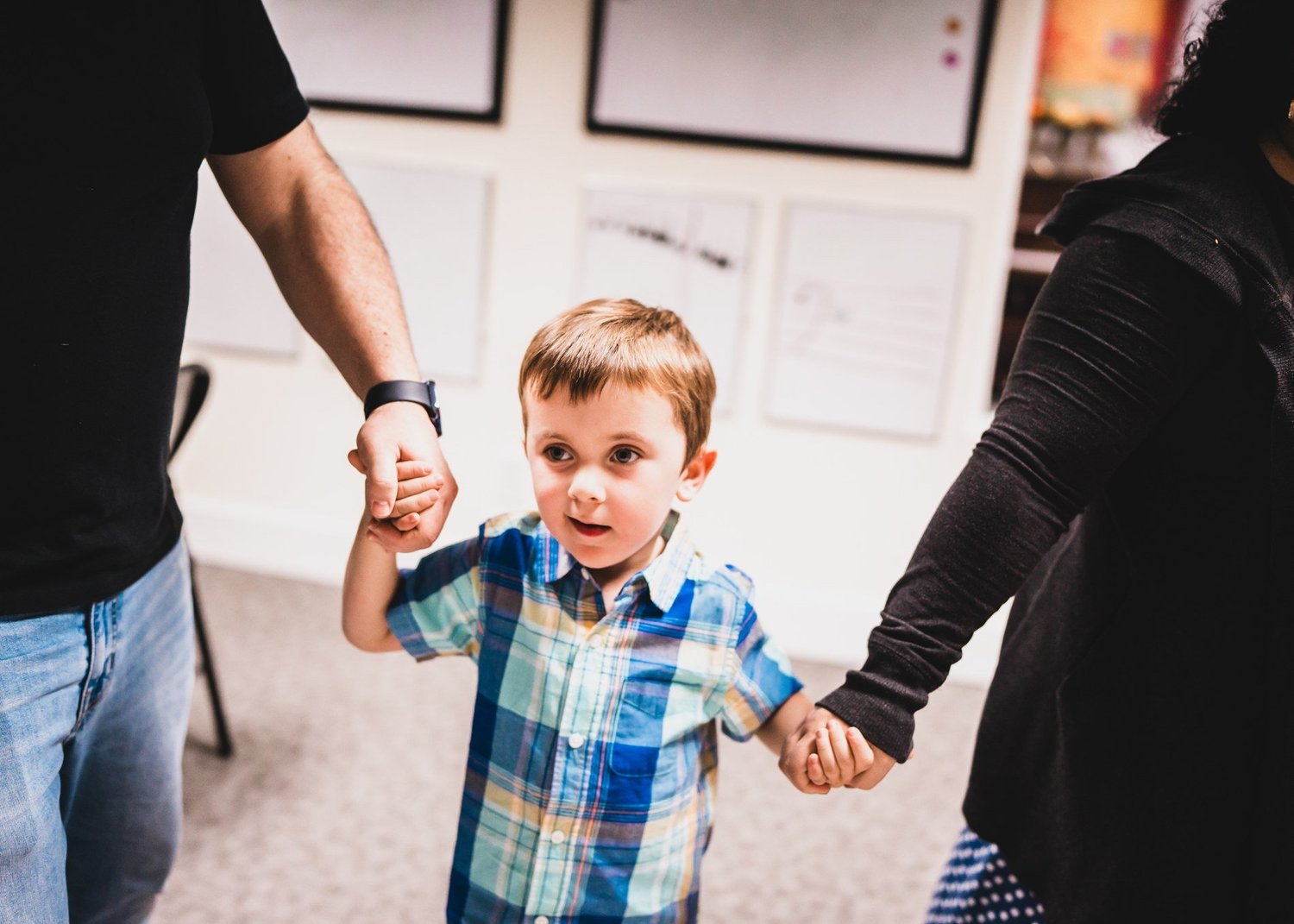
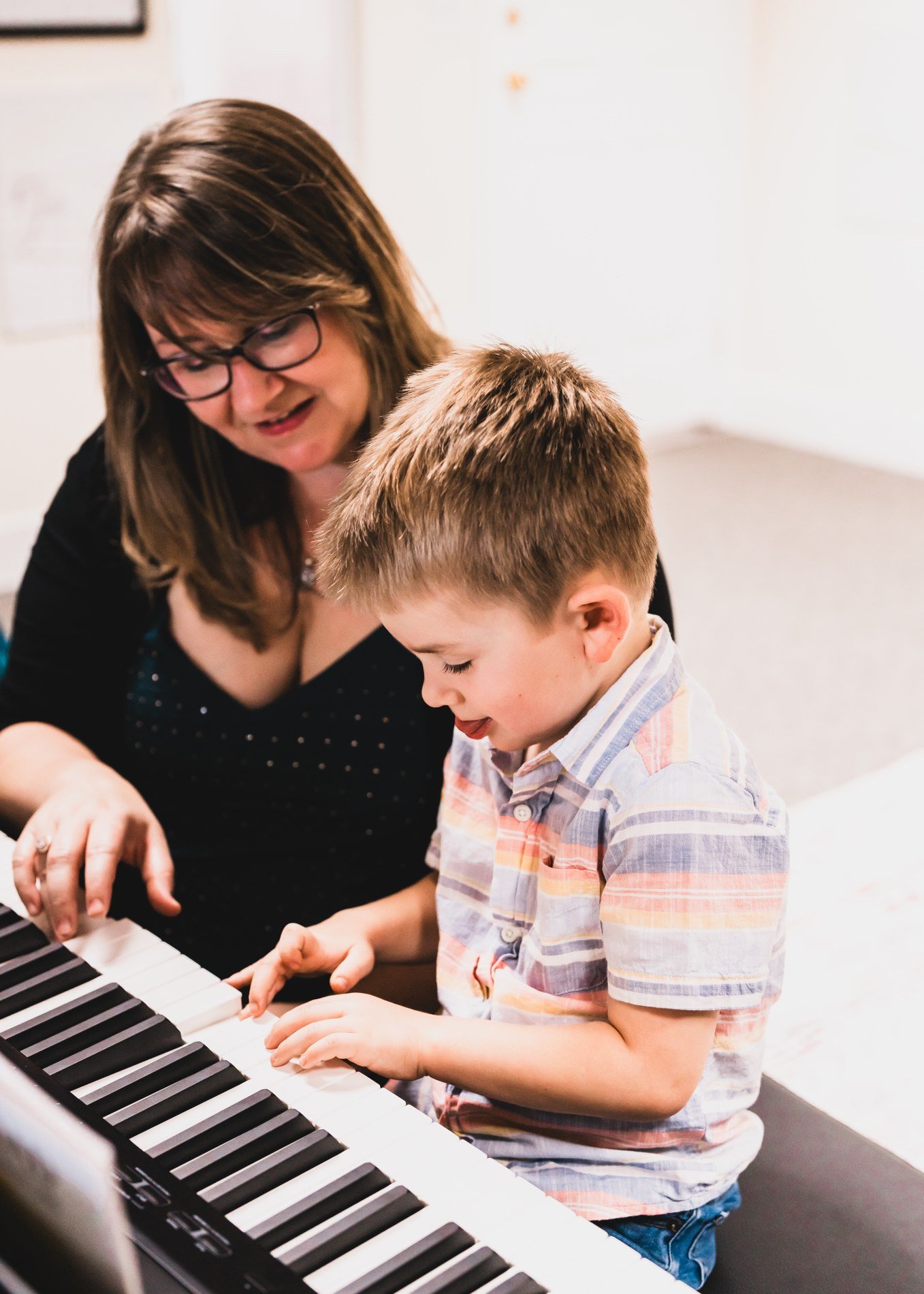
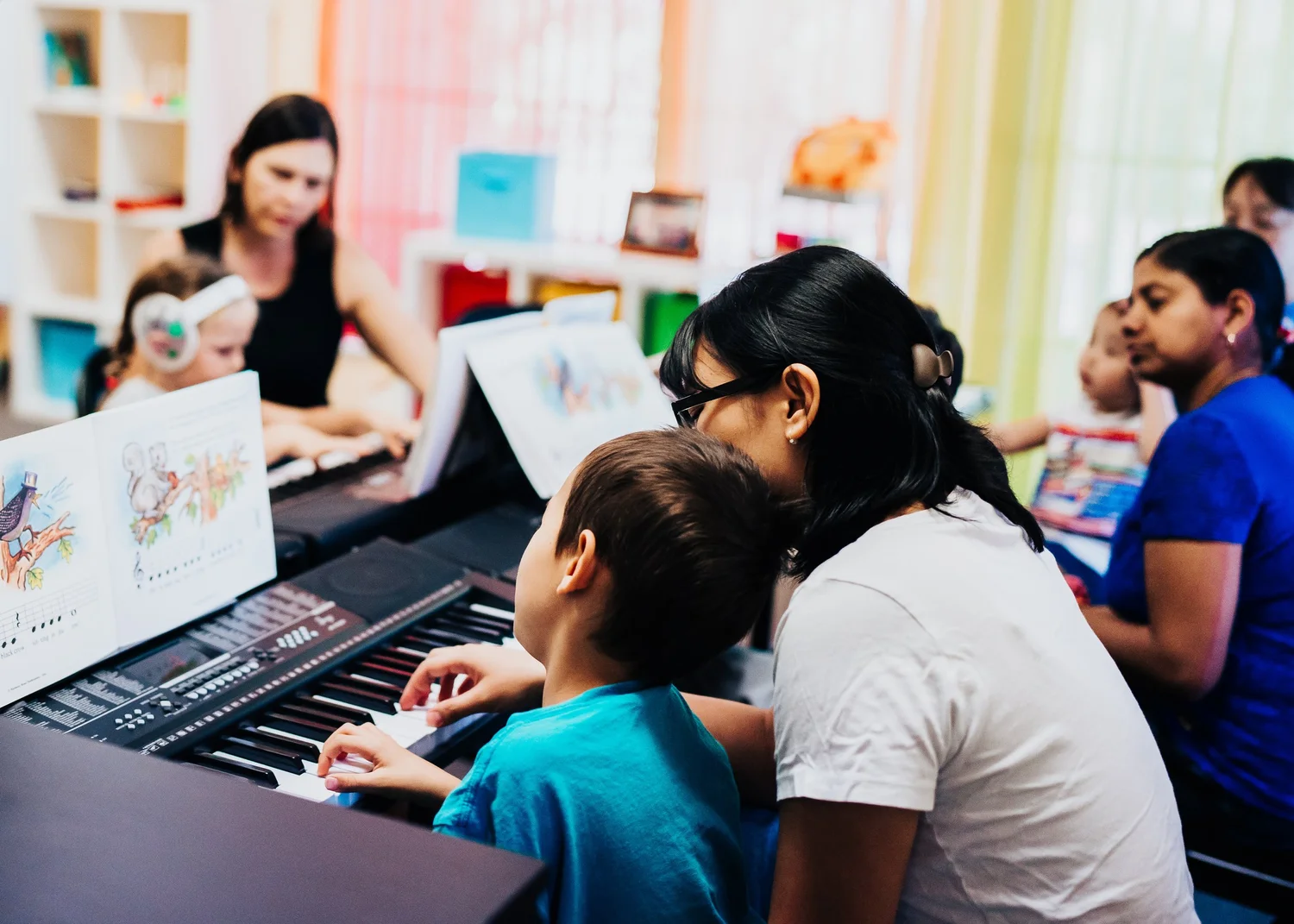
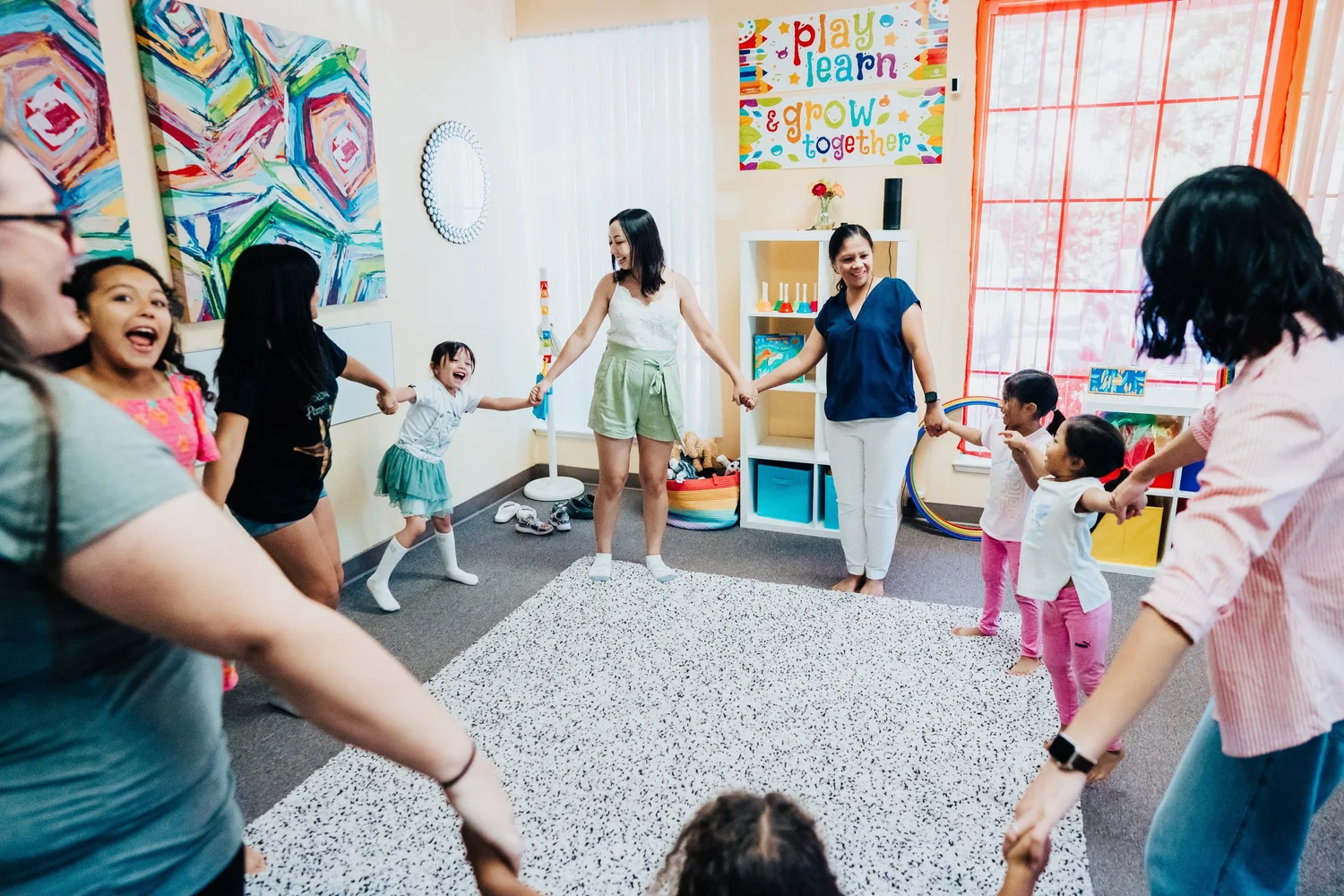
You’re part of this, too.
When you try, laugh and try again together, your child learns that music is something we do.
Because you learned it too, you can guide and encourage music-making and practice at home. Shared learning makes that support possible.
Your child’s independence and ownership grow over time; parent participation continues at every age and stage.
Independence is something we build.
So is persistence. So is practice. So is confidence.
“The parent participation also helps me to make sure I am aware of what he is learning and how best to assist my son in practicing those skills.”
The magic is in the layering.
They don’t have to know they’re learning it yet.
A child sings a pattern, moves to a meter, hears tonal relationships and plays with musical opposites.
To them, they’re making music. We’re also building understanding.
Musical ideas settle into their ears, voices and bodies before we ask them to name them on a page.
Later, scales, meter, tonality, chords and notation connect to familiar experiences.
They’ve heard it. They’ve sung it.
They’ve moved it. They’ve felt it.
Now we’re simply giving a name and a symbol to something they already know.

The singing becomes ear training. The movement becomes rhythmic fluency. The patterns become theory.
We teach the child who is here now—and the musician they’re becoming.
A two-year-old and a seven-year-old learn differently. Our teaching grows with them.
DISCOVERING TOGETHER
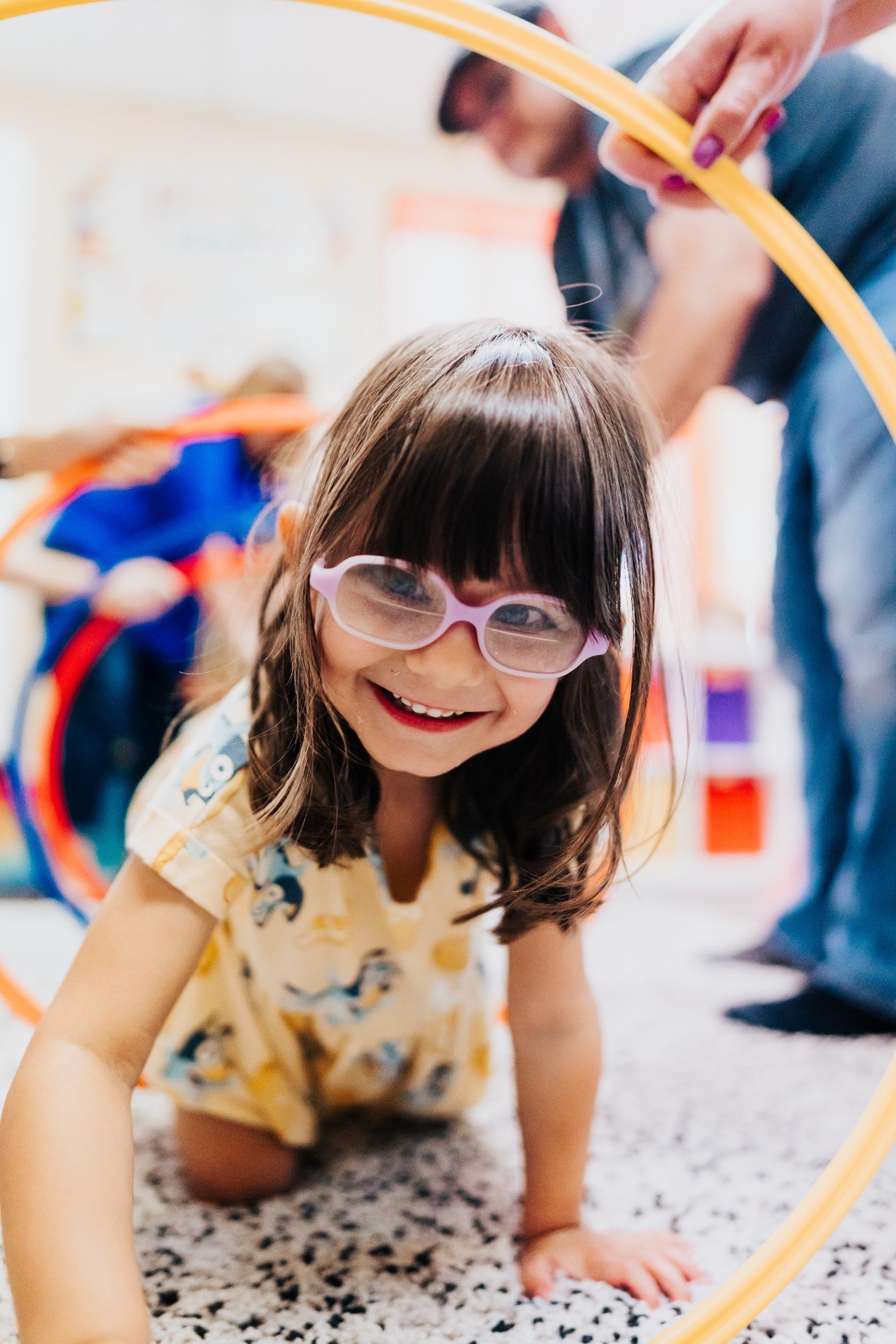
Our youngest students discover their voices, coordinate their bodies, imitate a trusted grown-up and learn to participate in a group.
LEARNING HOW TO LEARN
Preschoolers bring imagination and curiosity as they learn to listen, remember, take turns and follow patterns.
GROWING INTO OWNERSHIP
Older children collaborate, tackle challenges, read more complex notation and take greater ownership of their musicianship.
We don’t rush childhood.This is the real music learning.
Each age brings meaningful musical learning—and a foundation for what comes next.
“My 3.5 yo son loves music class. Ms. Moriah (his favorite teacher), and Ms. Annie, were so patient with my active child.”
Built to grow over time.
Real musicianship develops through repetition, layering and time. Each program is designed to build over time, but families enroll one semester at a time.
Toddler Tunes
Shorter sessions may also be offered. Enter the intentionally repeatable curricula in any order.
Music in Me /
More Music in Me
Shorter 8-week sessions may also be offered. Beginners may enter either curriculum; Music in Me is not a prerequisite.
Harmony Road
Young Musician
Keyboard Prep
Yes, music really does all that.
Music learning engages interconnected systems for listening, attention, memory, movement, language and emotion—processes children draw on well beyond musical performance.
These processes work together, not in isolated “music spots.” Research finds meaningful relationships, but outcomes vary; music lessons do not guarantee higher IQ, grades or academic achievement.
See the Research
A remarkable amount is happening. Researchers study both the systems engaged during music-making and whether learning music transfers to other abilities. Those are different questions.
- Listening and moving work together. Zatorre, Chen & Penhune (2007), Nature Reviews Neuroscience reviews interacting auditory and motor networks in perception and performance. It explains musical processing, not a guaranteed developmental outcome.
- Language connections are promising. Hutchins (2018), Music Perception followed 90 children ages 3–6 in conservatory classes. Vocabulary, pre-reading and singing improved beyond age-based expectations. This observational study concerns that program; it does not establish that every curriculum causes those gains.
- Attention and self-control are active areas of research. Rodriguez-Gomez & Talero-Gutiérrez (2022), systematic review found encouraging evidence, strongest for inhibition, across 29 varied studies. Working-memory and flexibility findings were less consistent.
- Music connects with emotion and cooperation. Koelsch (2014), Nature Reviews Neuroscience reviews interacting emotion and reward systems. Kirschner & Tomasello (2010) found greater immediate helping and cooperation after joint music-making among four-year-olds. That is not proof of lasting social change from every class.
- Engagement is not a promise of higher grades. Sala & Gobet (2020), meta-analysis found no reliable broad cognitive or academic transfer when study quality was accounted for. Musical growth is valuable in its own right.
For curious parents: Daniel J. Levitin’s This Is Your Brain on Music is an accessible introduction to how perception, memory, movement and emotion interact in musical experience—not a clinical trial or a promise of smarter children.
The Royal Conservatory’s explanation of its early-childhood language research offers helpful context. We have linked the underlying Hutchins study above so you can distinguish the research from the organization’s interpretation.
Good to know.
Do we have to start with Toddler Tunes?
No. Begin with the program designed for your child’s age and readiness. Older beginners do not go back through the younger programs.
- Toddler Tunes — begin with 1, 2 or 3
- Music in Me or More Music in Me — begin with either
- Harmony Road — begin with Book 1
- Young Musician — begin with Book 1, around age 6½
- Keyboard Prep — begin with Book 1, around age 8
For a child starting young:
Toddler Tunes → Music in Me / More Music in Me → Harmony Road
After Harmony Road, private lessons or another appropriate next step may follow.
For an older beginner: start directly in Young Musician Book 1 or Keyboard Prep Book 1, according to age and developmental readiness. We’ll help you choose.
How long is a semester?
- Toddler Tunes — 18-week full semester; shorter sessions may also be offered
- Music in Me / More Music in Me — 16-week full semester; 8-week sessions may also be offered
- Harmony Road — 20 weeks
- Young Musician — 20 weeks
- Keyboard Prep — 20 weeks
Am I committing to the entire multi-semester curriculum?
No. Families commit one semester at a time. The multi-semester curriculum shows how much room there is for continued musical growth; it is not an upfront multi-semester commitment.
What happens at the end of a semester?
If your child is continuing, we’ll automatically reserve their place in the next semester so you don’t have to re-register every few months. Before the next semester begins, we’ll send you the dates, tuition and an opt-out deadline with plenty of time to decide. If you don’t want to continue, simply let us know by that deadline.
Can we join after a semester has started?
Availability and appropriate entry timing vary by class. Contact Heart Beats and we’ll help you find an appropriate current opening or upcoming starting point.
What if we’re not ready for a full semester?
Shorter Toddler Tunes and 8-week Music in Me sessions may be available. Seasonal Intro Sessions offer four classes over two or four weeks, with grown-up participation and teacher guidance. A full semester offers more repetition and continuity; contact us to explore current options.
Do parents participate in class?
Yes. A grown-up actively participates in every Harmony Road class. Parent participation is an important part of the program at every age and stage. You’ll sing, move, play, listen and learn alongside your child, then support music-making and practice at home. Children develop greater independence and ownership as they grow; parent participation remains part of the program. Grown-ups participate in Intro Sessions and demos too.
How do I know which class is right for my child?
Age provides the starting point. If your child is near an age boundary or you’re unsure, contact Heart Beats and we’ll help you choose the class that fits.
Ready to find your child’s class?
See current classes, schedules, availability and tuition.
Not sure where to start? We’ll help you choose →